
Azure Fundamentals: Knowledge Library & Illustrated Guides
Find a lesson, explanation or study reference within this exam.
Search covers this exam’s lessons, illustrated guides and published study references.
 ORIGINAL GUIDE
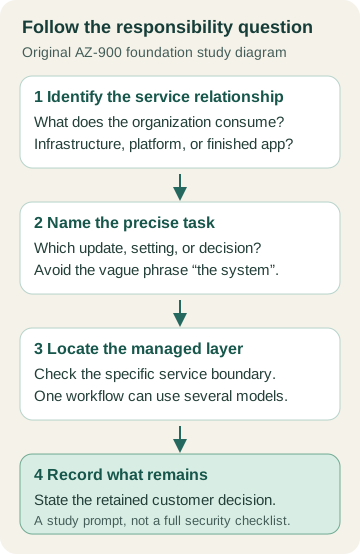
Azure Shared Responsibility: Follow the Control Before Assigning the Duty
Resolve a mixed-service handoff without treating a managed platform as a blanket transfer of responsibility.
Read the illustrated guide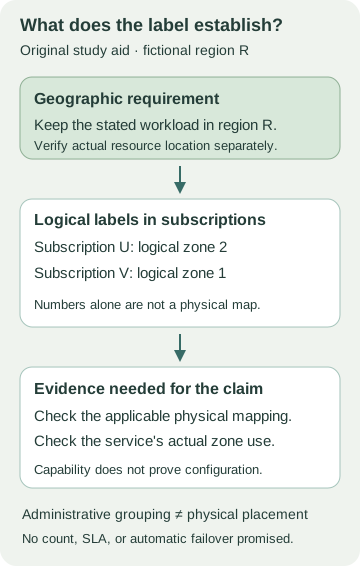 ORIGINAL GUIDE
Azure Regions and Zones: Verify the Failure Boundary Behind the Label
A cross-subscription placement critique separates geography, logical zone names and actual service deployment.
Read the illustrated guide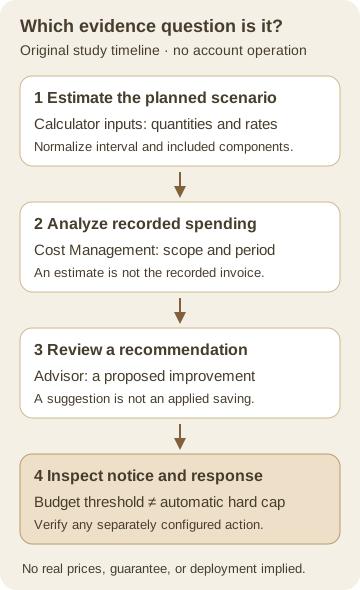 ORIGINAL GUIDE
Azure Cost Planning: Normalize the Estimate Before Comparing the Total
Follow a fictional estimate, recorded-cost investigation, recommendation and notification as different evidence tasks.
Read the illustrated guide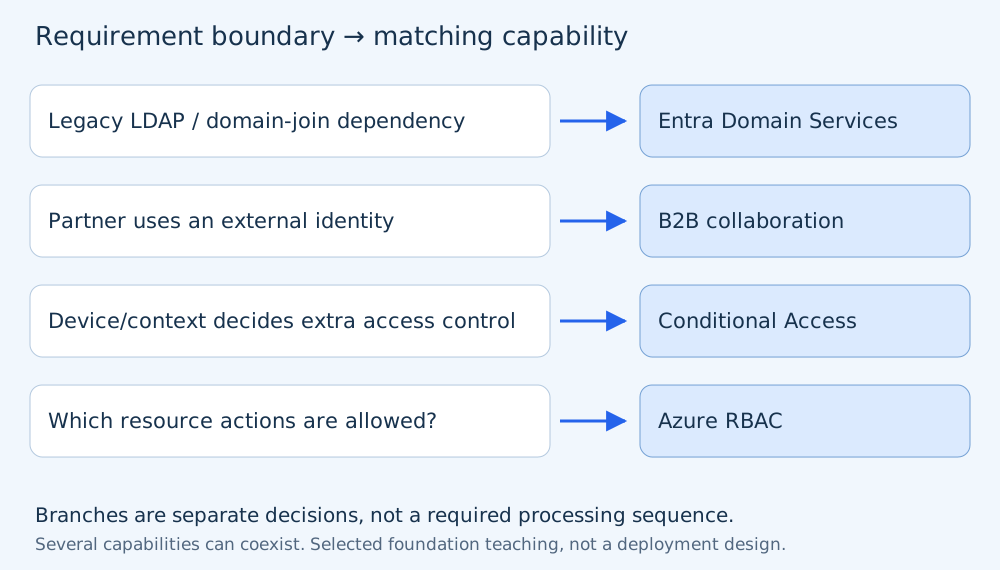 ORIGINAL GUIDE
Entra ID, Domain Services, B2B and Conditional Access: Name the Missing Decision
Follow a fictional museum’s mixed identity requirements without confusing a protocol, a guest relationship and an access policy.
Read the illustrated guideOriginal guides explain selected concepts using retained source references, new examples and original diagrams. They are teaching resources, not video transcripts or official exam papers.